Termite Fumigation: What You Can Expect

If whole-structure fumigation has been recommended for your home, it’s natural to have questions about what happens next. Tenting your home requires preparation and temporarily leaving the property, but understanding the process ahead of time can make the experience much easier to manage.
Here’s what homeowners should know:
Structural fumigation is a carefully controlled process performed by licensed professionals. Your fumigation provider will give you specific instructions based on your property and treatment plan, including how to prepare your home, when you’ll need to leave, and when it has been cleared for re-entry.
Knowing what to expect before the scheduled treatment can help you prepare your household and avoid last-minute surprises.
1. Preparing Your Home for Fumigation
Before fumigation begins, everyone must leave the property for the period specified by the fumigation provider. This includes household members and pets. Indoor plants will also need to be removed or handled according to the preparation instructions you receive.
Food, beverages, medications, and other consumable products may also require special preparation. Depending on the product and packaging, certain items may need to be removed from the home or placed in approved protective bags.
Before your fumigation appointment:
- Review the preparation instructions provided by your fumigation company.
- Make arrangements for household members and pets to stay elsewhere.
- Follow the provided instructions for food, medications, and other consumable items.
- Remove or prepare indoor plants as directed.
- Make sure the fumigation team has access to the areas identified in your preparation instructions.
Because preparation requirements can vary, use the instructions provided for your specific fumigation as your primary checklist rather than relying solely on general online advice.
Completing these steps before the crew arrives can help the fumigation process begin as scheduled and reduce avoidable complications.
2. What Happens During the Fumigation Process
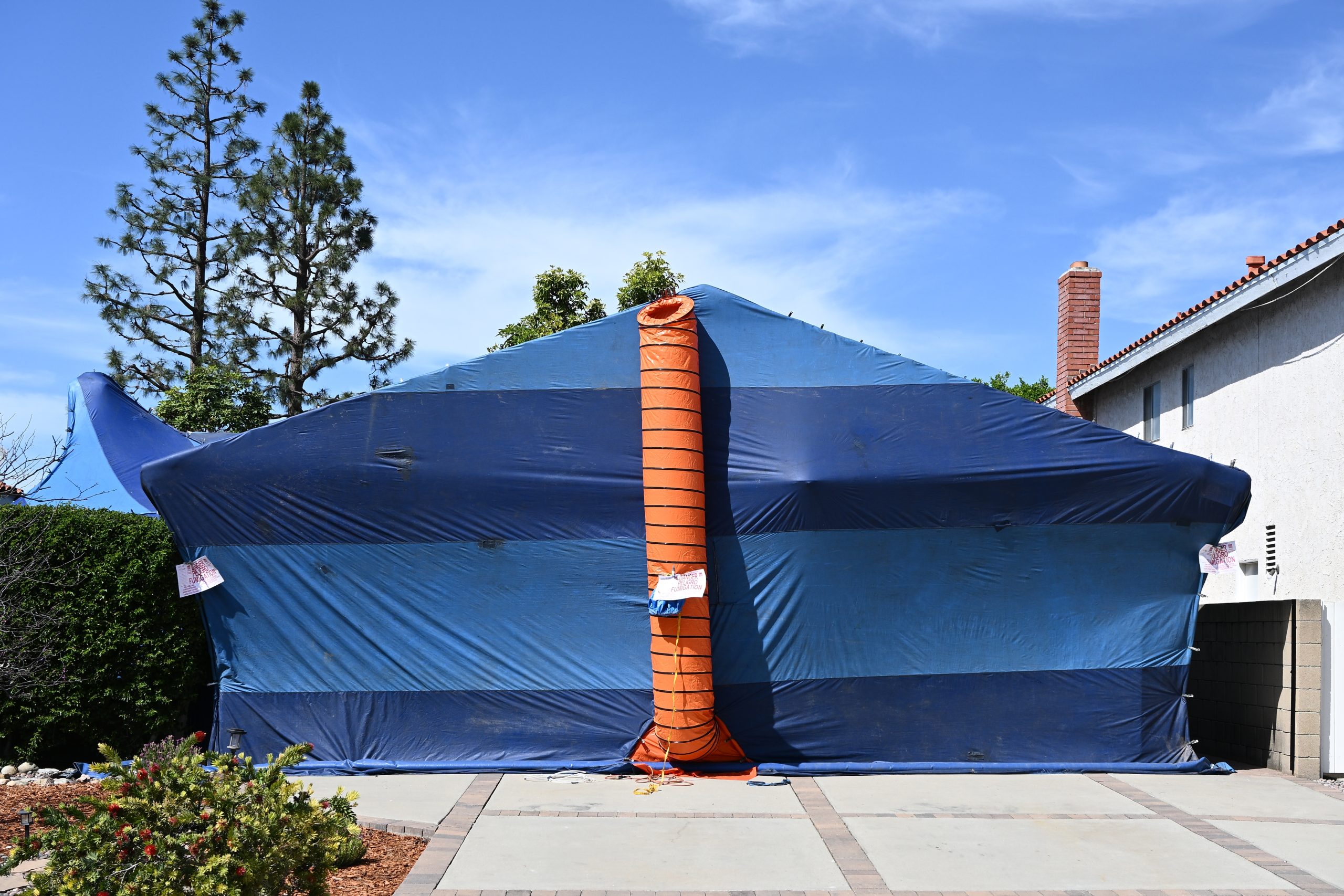
Once your home has been prepared and everyone has left the property, the fumigation team can begin securing the structure. Specialized tarps are placed over the home and sealed to create the enclosed environment needed for treatment.
The fumigant is then introduced into the structure according to the treatment plan. Because whole-structure fumigation is designed to reach areas throughout the home, it can address drywood termites in locations that may be difficult to access with localized treatments.
What happens next?
After the required exposure period, the structure enters the aeration phase. The fumigation team follows established procedures to ventilate the property and allow the fumigant to dissipate.
The total amount of time you’ll need to remain out of your home can vary based on the treatment plan and other property-specific factors. Your fumigation provider should give you a schedule before treatment begins so you know when to leave and when the property is expected to be evaluated for re-entry.
Most importantly, do not enter the property until it has been officially cleared for re-entry by the appropriate licensed professional.
3. Understanding Fumigant Safety and Re-Entry
Safety procedures are an important part of structural fumigation. During treatment and aeration, the property must remain vacant, and homeowners should not return until the structure has been officially cleared for re-entry.
Why does this matter?
The fumigation process includes an aeration period designed to allow the fumigant to dissipate from the structure. Before re-entry, a licensed professional follows required procedures to determine when the property can be safely occupied again.
Once the home has been cleared for re-entry, follow the instructions provided by your fumigation company regarding returning to the property and resuming normal activities.
You should never enter a tented or fumigated structure early—even briefly to retrieve belongings. If you have questions about re-entry, pets, food, medications, or other household items, contact your fumigation provider before returning to the home.
4. Protecting Your Roof, Landscaping, and Property
Structural fumigation requires crews to place and secure specialized tarps around the home. Because this process involves working around the roofline, exterior walls, and landscaping, it’s a good idea to discuss any areas of concern with your fumigation provider before treatment begins.
Before your scheduled fumigation:
- Point out vulnerable roof areas: Let your provider know about loose or damaged tiles, shingles, gutters, or other existing concerns.
- Discuss landscaping near the home: Shrubs, vines, and other vegetation close to the structure may need special attention or preparation.
- Identify exterior features: Sprinklers, lighting, mailboxes, gates, or other items near work areas should be discussed if you’re concerned about potential damage.
- Follow your provider’s preparation instructions: Requirements may vary depending on the property and how the structure will be tented.
Taking photos of areas you’re concerned about before fumigation can also provide a useful record of the property’s existing condition.
If you have questions about potential incidental damage or responsibility for repairs, review those concerns with your service provider before signing the fumigation agreement so you understand the applicable terms.
If whole-structure fumigation has been recommended for your home, understanding the process and following your provider’s preparation and safety instructions can make the experience easier to manage.
Schedule a pest inspection with one of our local pest inspectors at (888) 468-2687.
Related Posts